
It seems that screens are everywhere—TVs, tablets, smartphones, laptops—and for the caregivers of children, that they have become part of everyday life.
Artificial intelligence products are rapidly transforming young children’s real-world and media environments.
But recent scientific research paints a complex picture for the development of infants, babies, and toddlers.
For children under age 3, excessive digital device use isn’t just about “too much TV”, it’s about how digital media and products might interfere with how a young child’s brain and body develops and functions.
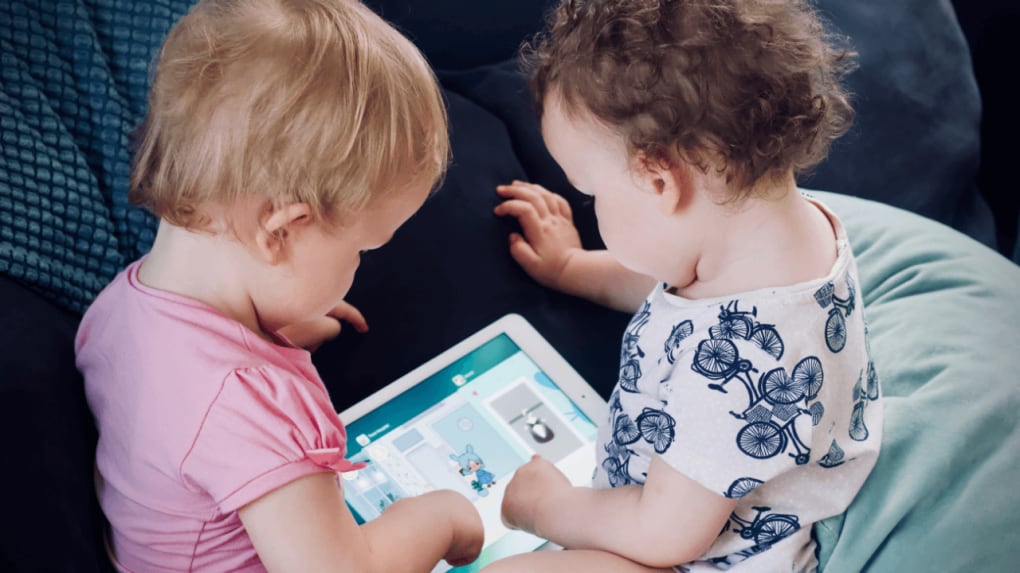
Attention and Focus: Shorter Spans, Bigger Struggles
Babies and toddlers are often being exposed to fast-paced, highly stimulating digital media. While these can be entertaining, they make it harder for young brains to concentrate on slower, more effortful tasks and are associated with effects on infants’, babies’ and toddlers’ behavior and temperament.
A 2022 study in JAMA Pediatrics found that more time spent using screen-based digital devices among boys at 1 year of age was significantly associated with displaying autism spectrum disorder symptoms by the time they were 3 years of age. The study’s authors conclude that “with the rapid increase in device usage, it is necessary to review the health effects of screen time on infants and to control excessive screen time.”
GAINING member and developmental specialist Lori Frome explains how babies and toddlers can develop autistic-like symptoms after regular exposure to digital media,
Extended and frequent digital device exposure during early childhood can interfere with natural developmental processes in these key areas:
Delayed Language and Social Skills
In the first few years of life, a baby’s brain is developing at an extraordinary rate. These early years are foundational for communication, emotional regulation, and social connection. But when digital devices enter the picture too early or too often, they can interrupt the rich, real-life interactions that babies need to thrive.
Even passive exposure to screen-based media—like background TV—can interfere with a baby’s ability to learn language and connect socially. Research from Madigan et al. (2019) found that more screen time at age 2 was associated with poorer performance on developmental screening tests at age 3, including communication skills. The more screen time toddlers had, the greater the delay observed later. According to Kirkorian, Pempek, & Anderson (2009), background television reduces the quantity and quality of parent-child interaction, limiting the kind of responsive communication that builds early language skills.
Christakis et al. (2009) also reported that for each hour of audible TV exposure, infants experienced a significant decrease in adult words, conversational turns, and child vocalizations—core ingredients in language development.
A 2023 study by Radesky and colleagues highlighted that toddlers with higher media exposure showed lower social-emotional competence. The study emphasized that screens may displace essential social learning that happens during play and face-to-face communication.
Changes in Brain Structure
The first three years of life are when the brain builds its foundation. During this time, over a million neural connections form every second—shaped by the baby’s environment, experiences, and relationships.
When digital device use takes the place of rich, real-world interaction, it can do more than delay development. It can actually change the way a baby’s brain is developing. A study from Cincinnati Children’s Hospital in 2019 used brain scans (MRI) to look at toddlers’ brains. The results showed that screen time was linked to lower development in the brain’s white matter—especially in areas involved in language, literacy, and cognitive control (Hutton, J. S., et al., 2019). White matter is like the brain’s highway system—it helps messages move quickly and smoothly between different regions. When it’s underdeveloped, kids may struggle more with learning, memory, and self-regulation as they grow.
Furthermore, digital media use in preschoolers was also found to be linked with reduced cortical thickness and sulcal depth in areas for visual processing, memory, attention, and social cognition (Hutton et al., 2022).
Therefore, babies and toddlers need real-world input—faces, voices, touch, movement—not fast-changing digital images or artificial relationships. Use of screen-based media can be passive and overstimulating for young children, which can’t give theirs brains the practice they need to grow strong communication and thinking skills.
Little to no scientific evidence on the impacts of AI-enabled toys on the development of children aged five and under, but early research shows the products can misinterpret children’s emotional cues and are ineffective at supporting critical developmental play.
Emotional Regulation and Mental Health
Research shows that infants can become anxious when they are unable to see their caregiver’s face—something that often happens when the caregiver is focused on a digital device. Face-to-face interactions are essential for babies to read emotional cues, feel secure, and begin to regulate their own emotions.
Excessive caregiver digital device use can reduce the quality and quantity of these crucial interactions, making it harder for infants and caregivers to form strong emotional bonds. This can delay the development of emotional regulation skills, which are foundational for future mental health. Concerns have been raised that interactions with AI-enabled playthings could harm young children’s relational health and foundational development.
Secure attachments—built through consistent eye contact, touch, and responsive communication—help infants feel safe and understood. These early connections lay the groundwork for a child’s ability to manage stress, develop empathy, and form healthy relationships later in life.
Moreover, when caregivers are distracted by digital devices during key moments of interaction—such as feeding, soothing, or playtime—it can send mixed signals to the child, creating confusion and emotional distress. Protecting these everyday moments helps support the infant’s growing sense of self and emotional resilience.

So, What Can Parents Do?
Protecting your child’s developing brain starts with small, mindful choices—and you don’t have to do it alone. We’ve created practical tools and guidance to help.
- Set digital device use limits early. For age-specific recommendations and what to watch out for, read our Parents and Caregivers News to Know. For the latest studies and guidance also check our Research page.
- Model healthy habits. Children mirror the adults around them. Our Resources section has simple, tech-free activity ideas for the whole family.
- Prioritize real connection. Nothing builds a child’s brain like talking, playing, and reading together. Find out more about early interaction on our What Babies Need page.

